
Building Solo-Aware Practice and Systems
Solo-Aware practice begins by asking what support is actually available, arranged, appropriate, and accessible rather than assuming support based on family structure, partnership status, or social connection.
Many healthcare, aging, legal, financial, advocacy, and community systems were developed around an implicit expectation that a spouse, adult child, family member, or caregiver will be available when support is needed. But family structure does not establish support capacity.
Solo-Aware practice recognizes when reliable support cannot be assumed, assesses what support is actually in place for a particular role or circumstance, and identifies alternatives or backup when needed.
The goal is not to remove family from the picture. It is to design professional practices and systems that can also function when family support is unavailable, inappropriate, or cannot reasonably be relied upon.
NEW RESEARCH
Available October 2026
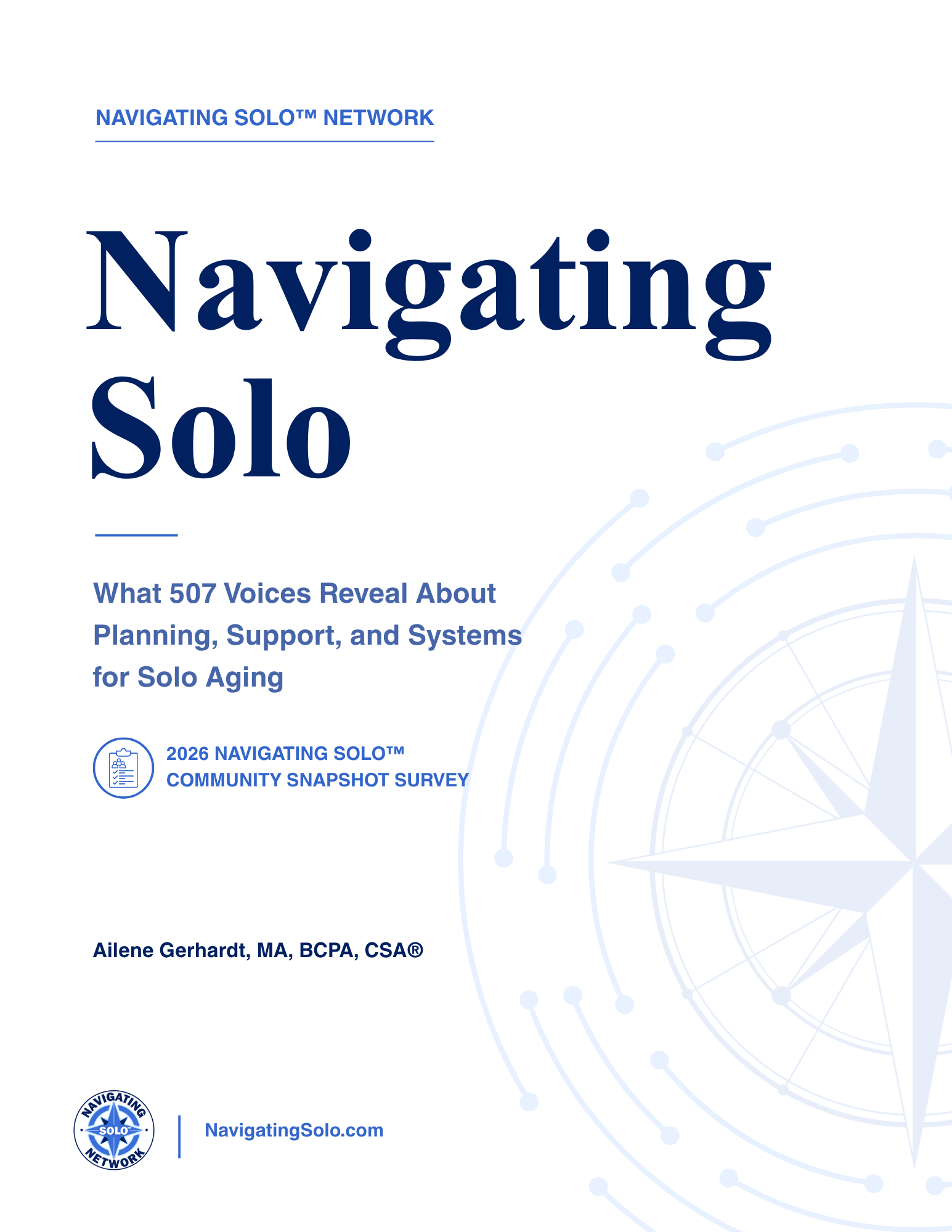
What 507 Voices Reveal About Planning, Support, and Systems for Solo Aging
The 2026 Navigating Solo™ Community Snapshot Survey gathered responses from 507 people about planning, support, access, professional resources, community, and the systems people may need as they age. The resulting white paper introduces Solo-Aware practice as one framework for helping professionals and organizations respond when reliable support cannot be assumed.
65.3% of respondents identified systems not designed for people without immediate family as a barrier to planning.
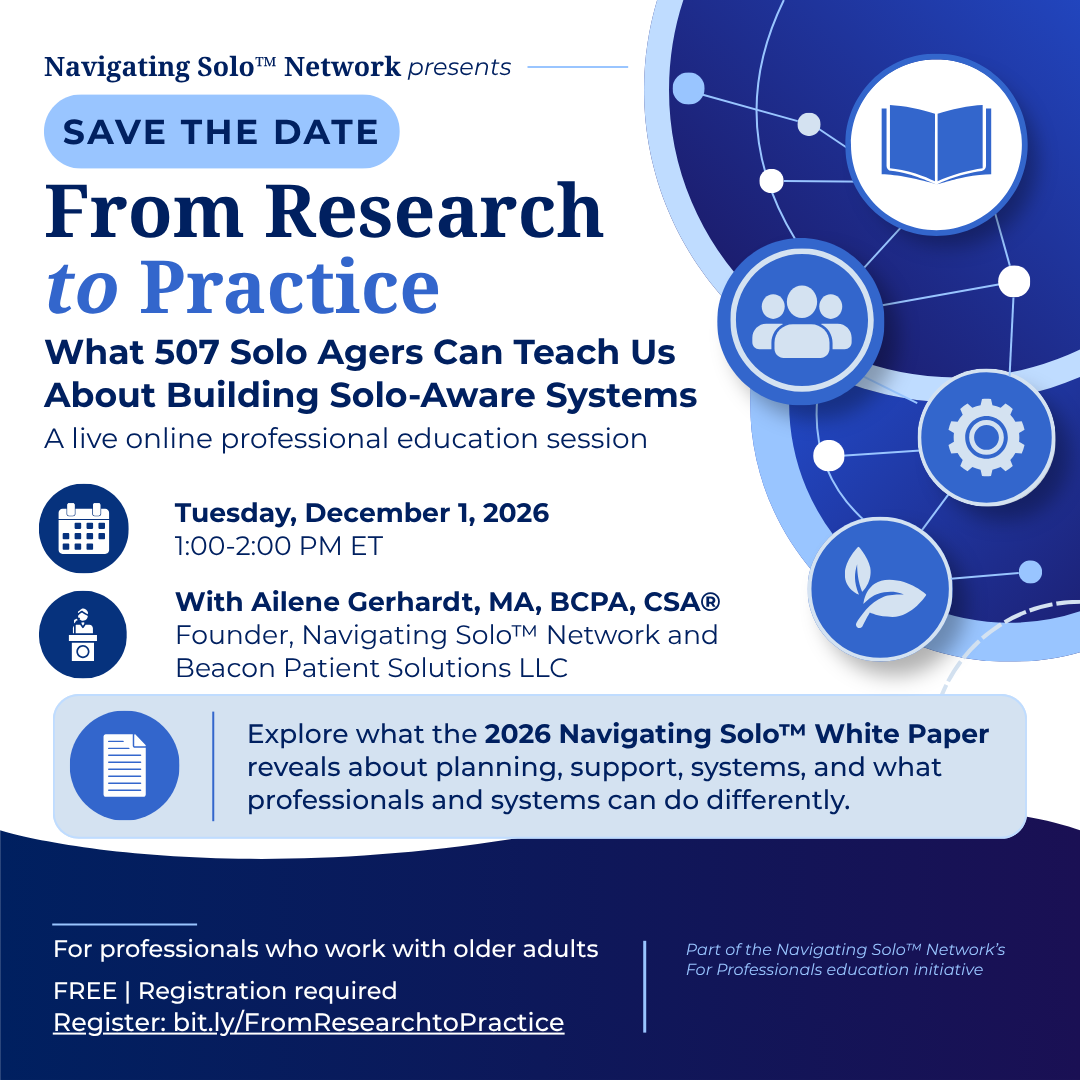
Upcoming Online Professional Education Session
From Research to Practice: What 507 Solo Agers Can Teach Us About Building Solo-Aware Systems
December 1, 2026 | 1:00–2:00 PM ET
Tools to Reframe Your Practice / Organization Today
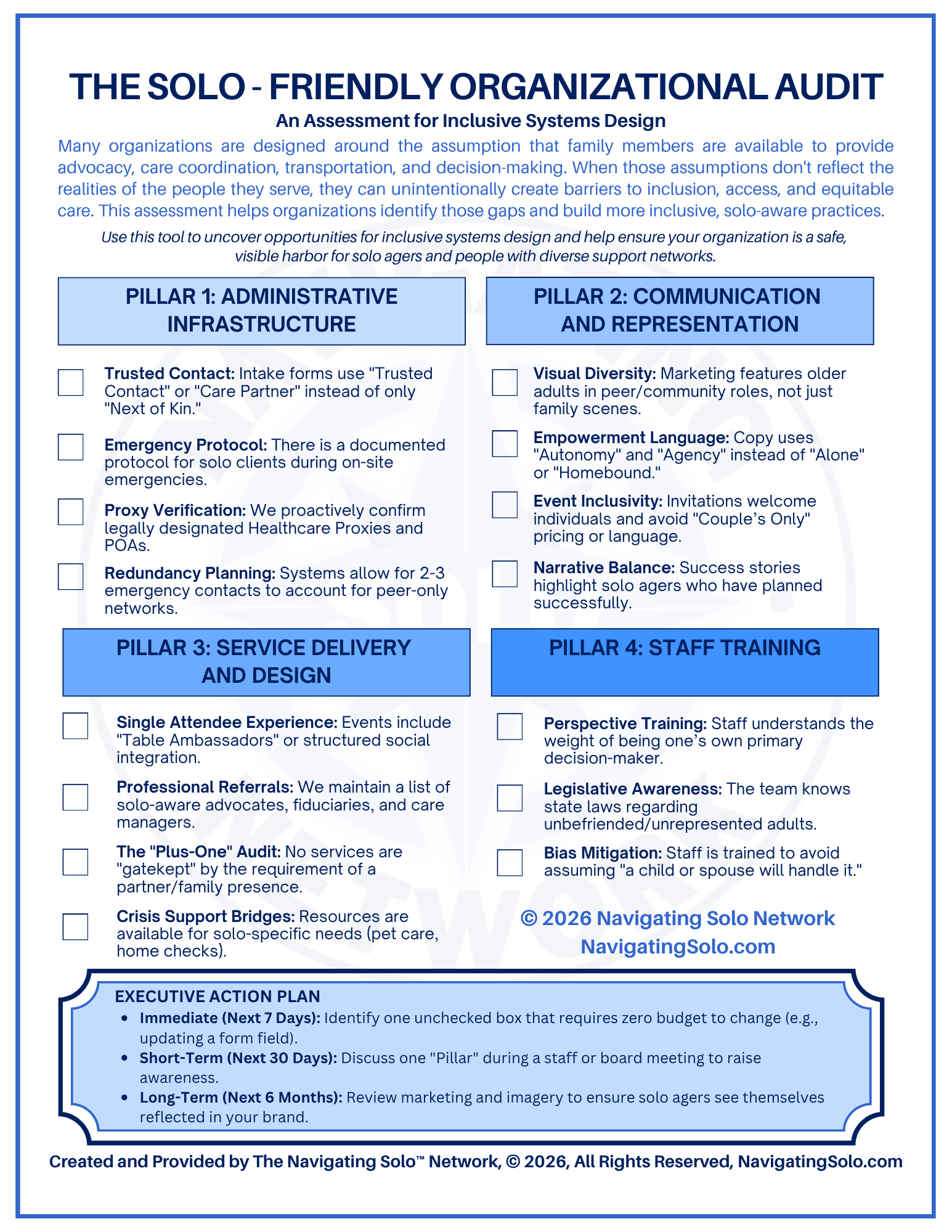
Download The Solo-Friendly Organizational Audit (complete the form below)
An introductory Solo-Aware organizational assessment
Featured in the CSA Journal, this four-pillar assessment helps organizations examine the assumptions embedded in forms, communication, service delivery, and staff practices, including where processes may presume that a spouse / partner, family member, or caregiver will be available.
Use it as a starting point for identifying practical opportunities to make your organization more Solo-Aware.
Stay Connected to the Navigating Solo™ For Professionals Initiative
Navigating Solo™ is expanding its work with professionals and organizations through education, practical tools, and resources designed to support more Solo-Aware practice and systems.
Complete the form below to let us know you’re interested and to receive updates about upcoming sessions, resources, and opportunities to engage.
COMING SOON:
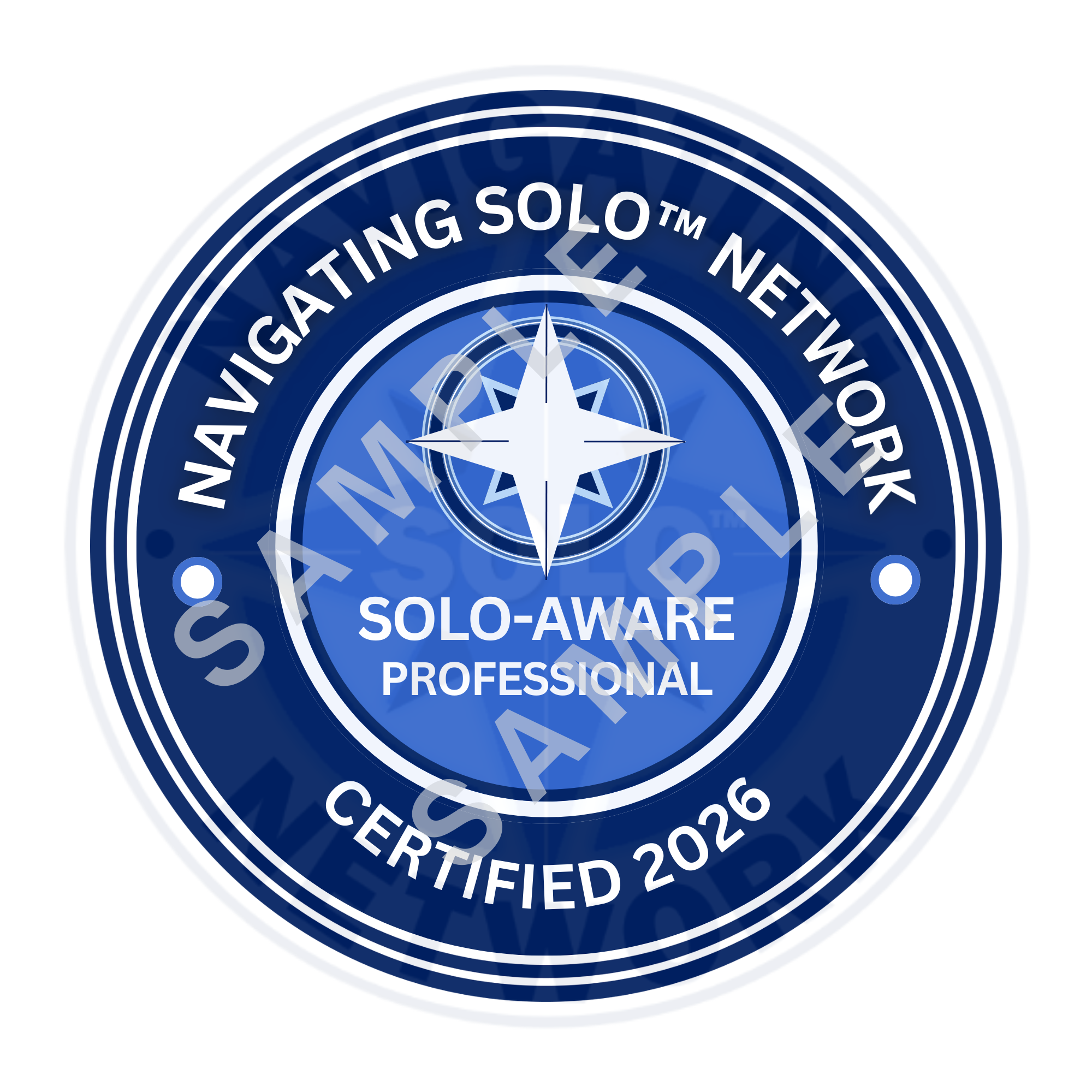
Earn Your 2026
Solo-Aware Digital Badge
Earned upon successful completion of the Solo-Aware Practice Assessment and required learning components.
THE SOLO-AWARE PROFESSIONAL PATHWAY:
Designed for professionals and organizations across healthcare, aging services, patient advocacy, legal and financial planning, care management, senior housing, community services, and related fields.
Learn
Understand the support assumptions that can affect people navigating solo aging.
Assess
Use the Solo-Friendly Organizational Audit and forthcoming Solo-Aware Practice Assessment.
Apply
Identify changes to forms, communication, service delivery, referrals, and alternative pathways.
Demonstrate
Complete the assessment requirements for the Navigating Solo™ Solo-Aware Digital Badge.